
US-Iran Regime Change, Part Two
Oh great, another regime change war launched by the US in the Middle East

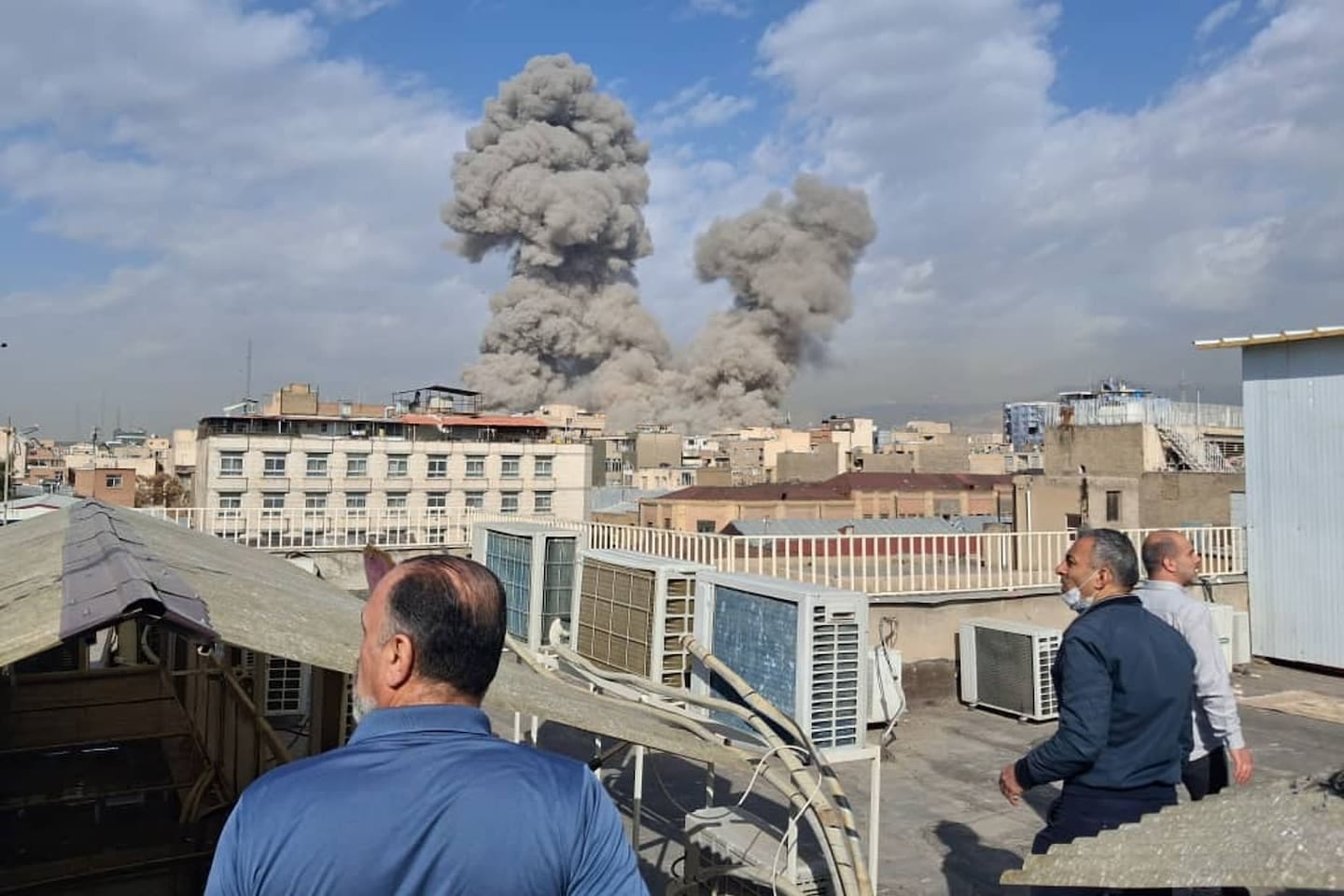
This feels like deja vu, but it is hard to tell which historical event it correlates with. Is it the US removing Iran’s democratically elected leader with the pro-American Shah in 1953, or the War on Terror that led the US to install democracies in the Middle East, or the Venezuela operation that took out Nicolas Maduro in a weekend JUST A FEW WEEKS AGO, or all of the above?
On Saturday, the US and Israel began launching airstrikes in a daylight attack against Iran. Israel’s Defense Minister, Israel Katz, first announced the strikes while declaring a state of emergency. Airspace above Israel and Iran was almost immediately halted, and air raid sirens were heard across Israel.
On the ground in Iran, video footage showed explosions being heard as Tehran residents reported panic and chaos among the public, while thick smoke was seen coming from the Tehran district where Supreme Leader Ayatollah Ali Khamenei normally resides. Iranians say they have not received any direction from the government, and air raid sirens were not activated when the strikes happened, as hospitals in both Iran and Israel were preparing for casualties.
US officials later confirmed their involvement in the new strikes, noting to the NYT that “they expect this attack to be far more extensive than the American strikes last June against Iranian nuclear facilities.” Dozens of US strikes were carried out by attack planes based in America’s bases in the Middle East and aircraft carriers, with the focus being on Iran’s military apparatus.
On a Truth Social post, Trump confirmed the US military has begun “major combat operations” in Iran, saying in an eight-minute video that “Our objective is to defend the American people by eliminating imminent threats from the Iranian regime, a vicious group of very hard, terrible people. It’s menacing activities directly endanger the United States, our troops, our bases overseas, and our allies throughout the world.”
Senior Arab and European officials said the White House was still not telling them what the objective of the strikes would be hours before the attack, but during his speech, Trump made the goal clear. Urging the Iranian people to “take over your government” after the military operation, Trump said of regime change, “This will be probably your only chance for generations. For many years, you have asked for America’s help, but you never got it. No president was willing to do what I am willing to do tonight. Now you have a president who is giving you what you want, so let’s see how you respond.”
Meanwhile, Trump admitted there could be American casualties, “My administration has taken every possible step to minimize the risk to US personnel in the region. Even so, and I do not make this statement lightly, the Iranian regime seeks to kill. The lives of courageous American heroes may be lost and we may have casualties.”
The IDF then said it had identified missiles launched from Iran and was working to intercept them, as explosions were later heard in northern Israel. In a video statement, Israeli PM Benjamin Netanyahu said the US and Israel launched a “joint operation” against Iran’s “existential threat,” while confirming regime change by saying the attack could “create the conditions for the brave Iranian people to take their destiny into their own hands.”
Given the rodeo we had with Venezuela in January, none of this should be surprising to us. Trump has levied threats for months against the Tehran regime, not to mention the gradual build-up of US warships and other military equipment in the past few weeks. Just this week, there was a flurry of activity between Washington and Tehran.
The week began with a definitely not at all worrying sign when the US evacuated all non-emergency personnel from its Beirut embassy, and behind the scenes, Joint Chiefs Chairman General Dan Caine warned Trump and his officials that an Iran strike could carry significant risks of being tangled in a prolonged conflict.
Before the State of the Union (SOTU), Rubio delivered a briefing in Iran to the “gang of eight,” including senior members of both parties. In Iran, the regime issued a death sentence linked to the January unrest, despite the government promising the Trump administration that it would not execute protestors after he threatened “very strong action” if Tehran followed through on such punishment. At the same time, Reuters reported that Iran was nearing a deal to buy supersonic anti-ship missiles from China. Ratcheting up the threats after Trump’s SOTU speech, Iran threatened escalation if America attacks, including by reconsidering a doctrine that seeks to contain confrontations with Washington. The US deployed F-22 Raptors to Israel, which could mark the first deployment of military jets for a potential war mission.
Marking the last-ditch attempt at diplomacy, US and Iranian officials met in Geneva for the third round of indirect talks. Mediators say “significant progress” was made in the talks, but the technical aspects will be discussed next week, and both sides left without a deal. Claiming he remains a “skeptic of foreign military interventions,” Vance told the Washington Post there is no chance that military strikes against Iran would lead to a drawn-out war. In a report by Bloomberg, the Trump regime’s latest moves in Cuba were part of a plan to make the island more reliant on the US, giving it more leverage to push for change.
As the US aircraft carrier Gerald Ford arrived at Israeli shores, multiple countries have issued travel warnings not to travel to Iran and other Middle Eastern countries. The US Ambassador to Israel, Mike Huckabee, told embassy staffers if they want to leave the country, “do so TODAY.” Trump said he is “not happy” with the way Iran is negotiating, adding, “We’ll see what happens,” and he’d “love not to attack Iran, but sometimes you have to.”
Now that we are clear that regime change is the goal, we have to ponder what’s next. If last year’s Israel-Iran war and the US intervention are of reference, the conflict could last for days, but the bigger fear is how things could spiral out of control very quickly. If the US-Israel-led operation fails, will the theocratic regime in Tehran feel emboldened to launch counterattacks against the two enemies? Given that the scope of this conflict is more extensive than bombing nuclear facilities last year, it is hard to see Trump seeking a diplomatic solution to resolve the conflict.
Trump’s calls to help Iranians could ring hollow, especially given his broken promise just a few weeks back. When there were massive demonstrations against the regime in early 2026, Trump urged them to keep protesting and to “take over your institutions”, adding that “help is on its way.” However, a day after that announcement, Trump walked back from military intervention in Iran, citing assurances that Iranian authorities would not execute anyone. Nonetheless, more than 30,000 protestors were reportedly killed in the subsequent days.
And even if the regime change effort succeeds, who will replace him? Will it be someone else from the established regime who is more pro-US? That is possible, given that after the Maduro operation, the US let his VP, Delcy Rodriguez, take charge of the country. Another option is Iran’s Revolutionary Guard, which Trump told the forces to surrender with the promise of complete immunity during his address. Reza Pahlavi, the eldest son of the last Iranian shah, is a contender given his vocal opposition against the theocratic regime. Despite seeing him as a “nice guy” after a meeting in January, Trump claimed Pahlavi has little support in Iran.
Based on the current developments in the last few hours, there are a lot of unknowns moving ahead, but I want to end this emergency article with a few comments from Trump highlighted by MS Now’s Steve Benen, which aged like fine milk or wine, depending on how you assess it.
In September 2013, amid concerns about a possible U.S. confrontation with Iran, Donald Trump published a tweet that read, “Remember what I previously said — Obama will someday attack Iran in order to show how tough he is.” The Republican added, two months later, “Remember that I predicted a long time ago that President Obama will attack Iran because of his inability to negotiate properly — not skilled!”
A year earlier, the then-television personality wrote, “Now that Obama’s poll numbers are in tailspin — watch for him to launch a strike in Libya or Iran. He is desperate.”